
In this article, we’ll cover:
- What an event planner actually does (beyond what most people think)
- The core skills, certifications, and career paths available to event planners
- How the event planner job description has evolved with technology
- Daily workflows, tools, and processes that separate good planners from great ones
- Practical event planning tips for every stage of your career
Event Planner: The Complete Career & Craft Guide
Ask ten people to describe an event planner and you’ll get ten different answers. Some picture a clipboard-wielding coordinator barking orders into a headset. Others imagine someone picking centerpieces and tasting hors d’oeuvres. The reality is far more complex, far more demanding, and far more rewarding than either caricature.
An event planner is the person responsible for turning an idea, a goal, or a vision into a live experience. That experience could be a 50-person corporate retreat, a 5,000-attendee trade show, a hybrid product launch, or a weekend wedding. Regardless of scale, the event planner is the one making sure every moving part actually moves. If you’re curious about the full scope of the role, our deep dive on what is an event planner breaks down everything from responsibilities to required skills.
The modern event planner wears more hats than ever. You’re part project manager, part creative director, part budget analyst, part marketer, and part crisis negotiator. And the expectation is that you’ll switch between those roles seamlessly, often within the same hour.
This guide covers the full arc of the event planner career and craft: what the work actually looks like, what skills matter most, how to break in and move up, and how today’s best planners are using technology to work smarter.
What Do Event Planners Do Day to Day?
The honest answer? It depends on the day. An event planner’s daily routine shifts dramatically depending on whether you’re three months out from an event, three weeks out, or three hours out.
During the early planning phase, your days revolve around strategy and logistics. You’re nailing down goals with stakeholders, scouting venues, building budgets, negotiating vendor contracts, and drafting timelines. This stage is heavily organizational, and the decisions you make here ripple through every phase that follows.
As the event gets closer, the work becomes more tactical. You’re confirming speaker lineups, reviewing floor plans, coordinating catering, managing registration lists, approving signage and collateral, and troubleshooting the dozen small fires that inevitably spark. This is where attention to detail separates strong planners from struggling ones.
On event day itself, you become the central nervous system of the operation. You’re managing check-in flow, directing vendors, solving real-time problems, supporting speakers, and keeping the energy right for attendees. Our detailed look at what do event planners do walks through a real day in the life, hour by hour.
After the event wraps, there’s still work to do. Post-event surveys, budget reconciliation, vendor debriefs, lead handoffs, and ROI reporting all fall on the event planner’s plate. The best planners treat this phase as seriously as they treat event day, because it’s where you prove the value of what you built.
💡 Pro tip: Build a post-event checklist that you run within 48 hours of every event. The details you capture while they’re fresh will be ten times more useful than the ones you try to reconstruct weeks later.
The Event Planner Job Description: Roles, Titles, and Specializations
The title “event planner” covers a huge range of roles. Understanding the landscape helps whether you’re hiring or job hunting. A well-crafted event planner job description spells out the responsibilities, qualifications, and expectations clearly, and we’ve got free templates to make that easier.
Here’s how the career typically layers:
- Event Coordinator is often the entry-level title. You’re executing tasks handed down by a senior planner: managing vendor communication, tracking RSVPs, prepping event materials, and running day-of logistics support.
- Event Planner / Event Manager is the core role. You own one or more events end-to-end, from concept through execution and reporting. You’re managing budgets, timelines, vendor relationships, and stakeholder expectations simultaneously.
- Senior Event Planner / Director of Events oversees a portfolio of events or manages a team. Strategy, budget allocation across programs, and cross-functional leadership become the focus.
- VP of Events / Head of Experiential lives at the executive level, connecting event strategy to broader business goals like pipeline generation, brand positioning, or community building.
Beyond the corporate ladder, event planners also specialize by type:
- Corporate event planners focus on internal meetings, sales kickoffs, company retreats, product launches, and executive summits.
- Association and conference planners manage annual meetings, membership events, educational conferences, and certification programming.
- Trade show and exhibition planners coordinate large-scale expos with exhibitors, sponsors, floor plans, and lead retrieval operations.
- Social event planners work weddings, galas, fundraisers, and milestone celebrations.
- Hybrid and virtual event planners specialize in experiences that bridge in-person and digital audiences.
Each specialization comes with its own rhythms, challenges, and skill sets, but the core competencies overlap significantly.
Core Skills Every Event Planner Needs
You can teach someone how to use event software or negotiate a vendor contract. The harder skills to develop are the ones that define whether an event planner thrives under pressure or buckles.
Organization is the foundation. This sounds obvious, but the level of organization required to manage a complex event is far beyond keeping a tidy inbox. You’re tracking hundreds of details across dozens of vendors, multiple timelines, shifting budgets, and evolving stakeholder expectations, all simultaneously. An event planning checklist is one of the most important tools in your arsenal because it keeps those details from slipping through the cracks.
Communication ranks right alongside organization. An event planner communicates with vendors, venue staff, internal stakeholders, sponsors, speakers, and attendees, sometimes all in the same morning. The ability to be clear, direct, and calm across all those audiences is non-negotiable.
Budget management is where many event planners either prove their value or lose credibility. Knowing how to build a realistic budget, track expenses in real time, negotiate favorable terms, and report on ROI separates event planners from event hobbyists.
Problem-solving under pressure is the skill nobody puts on a resume but everyone needs. The speaker’s flight got canceled. The caterer double-booked. The AV system crashed during the keynote. Every event planner has a story like this, and the best ones handled it without the audience ever knowing.
Tech fluency has become essential. Today’s event planner needs to be comfortable with registration platforms, check-in systems, mobile event apps, virtual event tools, CRM integrations, and data analytics dashboards. You don’t need to be a developer, but you do need to understand how technology connects the pieces of a modern event. Choosing the right event planning software can make or break your workflow.
✨ Expert Advice: When evaluating your own skill set, focus on the gaps that slow you down the most. If budgets always feel chaotic, invest in financial tools and training first. If communication breakdowns cause repeated issues, prioritize stakeholder management processes. Grow where it hurts.
How to Become an Event Planner
There’s no single path into event planning. Some people study hospitality management or communications in college. Others fall into it from marketing, project management, or administrative roles. The good news: the event industry values demonstrated skills and experience over specific credentials.
Education helps but isn’t required. Degrees in hospitality management, business, communications, or marketing provide useful foundations. Several universities now offer event management-specific programs and certificates. But plenty of successful event planners started without any formal event education.
Certifications can boost credibility, especially if you’re job hunting or going independent. The most recognized certifications include:
- CMP (Certified Meeting Professional) is the industry gold standard, administered by the Events Industry Council. It requires experience and a passing exam score.
- CSEP (Certified Special Events Professional) from ILEA focuses on the creative and production side of events.
- CMM (Certificate in Meeting Management) from MPI targets senior-level planners moving into strategic roles.
- DES (Digital Event Strategist) from PCMA addresses the growing virtual and hybrid event space.
Experience is ultimately what matters most. Start by volunteering for event committees at your company or in your community. Intern with event agencies or convention centers. Take on small events and build your portfolio. Every event you touch, even a 30-person lunch-and-learn, teaches you something about the craft.
Networking in the event industry is not optional. Join professional organizations like MPI (Meeting Professionals International), ILEA (International Live Events Association), or PCMA (Professional Convention Management Association). Attend their events. The connections you build will open doors to jobs, clients, and partnerships throughout your career.
The Event Planner’s Technology Stack
Ten years ago, an event planner’s primary tools were spreadsheets, email, and a phone. Today, the technology ecosystem powering events has exploded, and the planners who embrace it have a significant competitive edge.
Registration and ticketing platforms are the front door to your event. They handle attendee sign-ups, payment processing, confirmation emails, and waitlist management. The best platforms, like Expo Pass, connect registration data directly to check-in, badge printing, and post-event analytics so you’re not manually reconciling spreadsheets after the fact. Find out more »
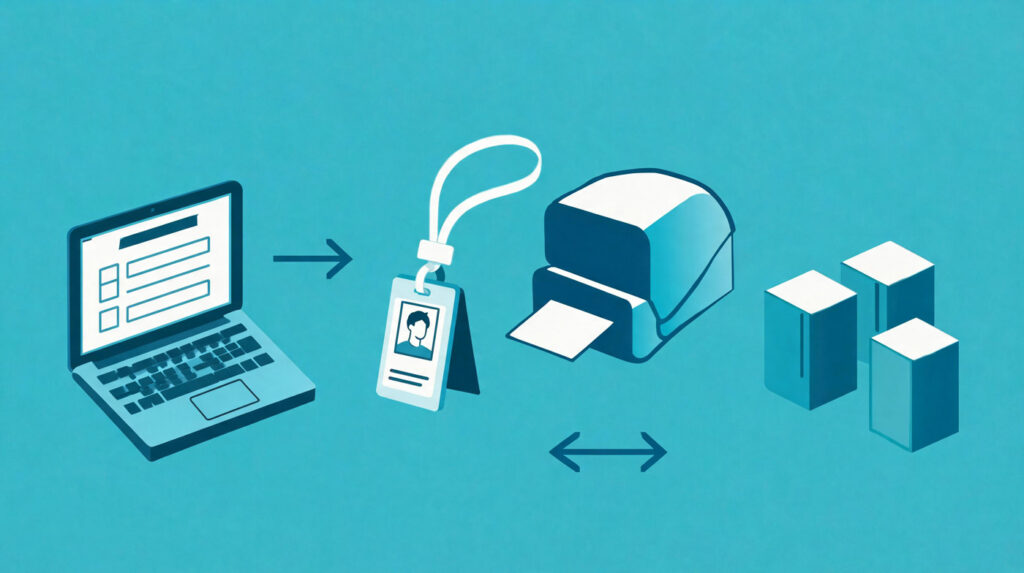
Check-in and badge printing systems eliminate the bottleneck that used to define event arrivals. Modern solutions support self-service kiosks, QR code scanning, on-demand badge printing, and real-time attendance dashboards. That means shorter lines, happier attendees, and better data.
Mobile event apps keep attendees engaged with schedules, speaker bios, maps, networking features, and push notifications. They also give planners real-time insight into which sessions are popular and how attendees are moving through the event.
Project management tools help event planners coordinate timelines, assign tasks, track progress, and keep stakeholder communication centralized. Whether you prefer Asana, Monday.com, or a simple shared spreadsheet, having a single source of truth for your event timeline is critical.
CRM and marketing automation platforms connect your event data to broader sales and marketing workflows. When an attendee registers, their information flows into your CRM. When they visit a sponsor booth, the lead data is captured. This integration turns events from standalone activities into measurable business drivers.
⚡ Practical Advice: Don’t try to adopt every tool at once. Start with the systems that solve your biggest pain points, typically registration and check-in, then add layers as your team and events grow.
Event Planner Salary and Career Outlook
Compensation for event planners varies widely depending on experience, location, specialization, and whether you’re in-house or independent.
Entry-level coordinators typically earn between $38,000 and $50,000 annually. Mid-level event planners with 3-7 years of experience range from $50,000 to $75,000. Senior planners and directors in major markets can earn $80,000 to $120,000+, especially in corporate and association environments. Independent event planners who build strong client bases can earn significantly more, though income tends to be less predictable.
The Bureau of Labor Statistics projects that meeting, convention, and event planner roles will grow faster than average over the coming decade. Demand is particularly strong for planners with hybrid and virtual event experience, data analytics capabilities, and tech-forward skill sets.
Where the opportunities are growing fastest:
- Corporate experience marketing (product launches, brand activations, customer summits)
- Healthcare and pharmaceutical conferences (heavily regulated, high budgets)
- Technology sector events (fast-paced, hybrid-first, data-driven)
- Association and continuing education events (credential-driven, recurring)
Event Planner Best Practices: Lessons from the Field
The difference between a competent event planner and an exceptional one often comes down to habits and systems. Here are the practices that seasoned veterans swear by. For an even deeper list, check out our compilation of event planning tips from experienced professionals.
Build templates for everything. Run-of-show documents, vendor briefing sheets, post-event survey templates, budget trackers: these tools save hours on every event and reduce the chance of missing critical details. The more you can systematize, the more mental bandwidth you free up for the creative and strategic work that actually differentiates your events.
Communicate proactively, not reactively. Don’t wait for stakeholders to ask for updates. Send regular status reports, flag risks early, and keep decision-makers in the loop even when things are going smoothly. Proactive communication builds trust and prevents the last-minute scramble.
Always have a backup plan. Experienced event planners don’t just hope things go right: they plan for things going wrong. Have a rain plan for outdoor events. Have a backup speaker if your keynote is traveling internationally. Have a manual check-in process ready in case the Wi-Fi drops. Redundancy isn’t paranoia; it’s professionalism.
Debrief every event, no matter how small. Within a week of the event, sit down with your team and document what worked, what didn’t, and what you’d change. These debriefs are how you get measurably better over time instead of just staying busy.
Invest in relationships, not just transactions. Your vendor partners, venue contacts, and AV teams are the people who will go the extra mile when you need it. Treat them well. Pay them on time. Recommend them to colleagues. The event industry runs on relationships, and an event planner with a strong network has an unfair advantage.
🌟 Great Advice: The best event planners aren’t the ones who never make mistakes. They’re the ones who learn from every event and build better systems each time. Your career trajectory is defined by your ability to improve, not your ability to be perfect.
The Future of Event Planning
The event planner role is evolving rapidly. Several trends are reshaping what the job looks like and what skills will matter most in the years ahead.
Data-driven decision making is replacing gut instinct. Event planners now have access to registration analytics, session attendance data, engagement metrics, and ROI dashboards that were unimaginable a decade ago. The planners who can interpret this data and use it to improve future events will be the most valuable.
Hybrid events are here to stay. The ability to design experiences that work for both in-person and virtual audiences is no longer a niche skill. It’s becoming a baseline expectation for any event planner working in the corporate, association, or education space.
Sustainability is moving from a nice-to-have to a requirement. Attendees, sponsors, and executives are all asking about the environmental impact of events. Event planners who can reduce waste, source responsibly, and measure their event’s carbon footprint will have a competitive advantage.
AI and automation are handling more of the repetitive work that used to consume event planner hours. Automated email sequences, AI-powered matchmaking, chatbot-driven attendee support, and smart scheduling tools free planners to focus on strategy and creativity. Expo Pass and other leading platforms are integrating these capabilities to help event planners work more efficiently without sacrificing the personal touch.
Personalization at scale is the next frontier. Attendees expect curated experiences, from personalized agendas to targeted networking recommendations to tailored content tracks. Delivering that personalization across hundreds or thousands of attendees requires both the right technology and the right event planner mindset.
Final Takeaway
The event planner career is demanding, unpredictable, and deeply rewarding. Whether you’re just starting out or you’ve been in the industry for decades, the fundamentals stay the same: obsess over the details, communicate relentlessly, plan for what can go wrong, and never stop learning. The tools and technologies will keep evolving. Attendee expectations will keep rising. But an event planner who combines strong craft with smart technology and genuine passion for creating experiences will always be in demand. This guide is your starting point, but the real education happens with every event you plan.
If you are looking for additional information checkout one of our favorite books Lucky Boxcutter, a must read for event planners.
Frequently Asked Questions
What qualifications do you need to become an event planner?
There’s no single required qualification to become an event planner. Many professionals enter the field with degrees in hospitality, business, or communications, but experience and demonstrated skills matter more than credentials. Certifications like the CMP (Certified Meeting Professional) can strengthen your resume and open doors, especially for corporate and association roles.
How much does an event planner make per year?
Event planner salaries range widely based on experience, location, and specialization. Entry-level coordinators typically start between $38,000 and $50,000, while experienced event planners in major markets can earn $80,000 to $120,000 or more. Independent planners with established client bases sometimes earn beyond those ranges.
What is the difference between an event planner and an event coordinator?
An event coordinator typically handles specific tasks and logistics under the direction of a senior planner. An event planner owns the event end-to-end, from concept and budgeting through execution and post-event analysis. Think of the coordinator as managing pieces and the event planner as managing the whole puzzle.
What software do event planners use?
Modern event planners use a stack of tools including registration platforms, check-in and badge printing systems, mobile event apps, project management software, and CRM integrations. Platforms like Expo Pass bring several of these functions together in one system, connecting registration to check-in, badge printing, lead retrieval, and attendance tracking.
Is event planning a good career in 2025 and beyond?
Yes. The Bureau of Labor Statistics projects faster-than-average growth for event planning roles. Demand is especially strong for planners with hybrid event skills, data literacy, and technology fluency. As companies invest more in experiential marketing and in-person engagement, the event planner role becomes more strategic and more valued.
How do event planners handle last-minute changes?
Experienced event planners build contingency plans for every major element of their events: backup venues, alternative speakers, manual check-in processes, and flexible vendor contracts. The key is anticipating potential disruptions before they happen and having a clear protocol for each scenario so the team can respond quickly without panic.